Keep the downtime. Change where it happens
If scrolling is your evening break, do not replace it with a list of chores. Give yourself an actual break earlier, even if it is short. Watch a chosen episode, sit with music, read something light, or call a friend. Choose something with an ending you can recognize.
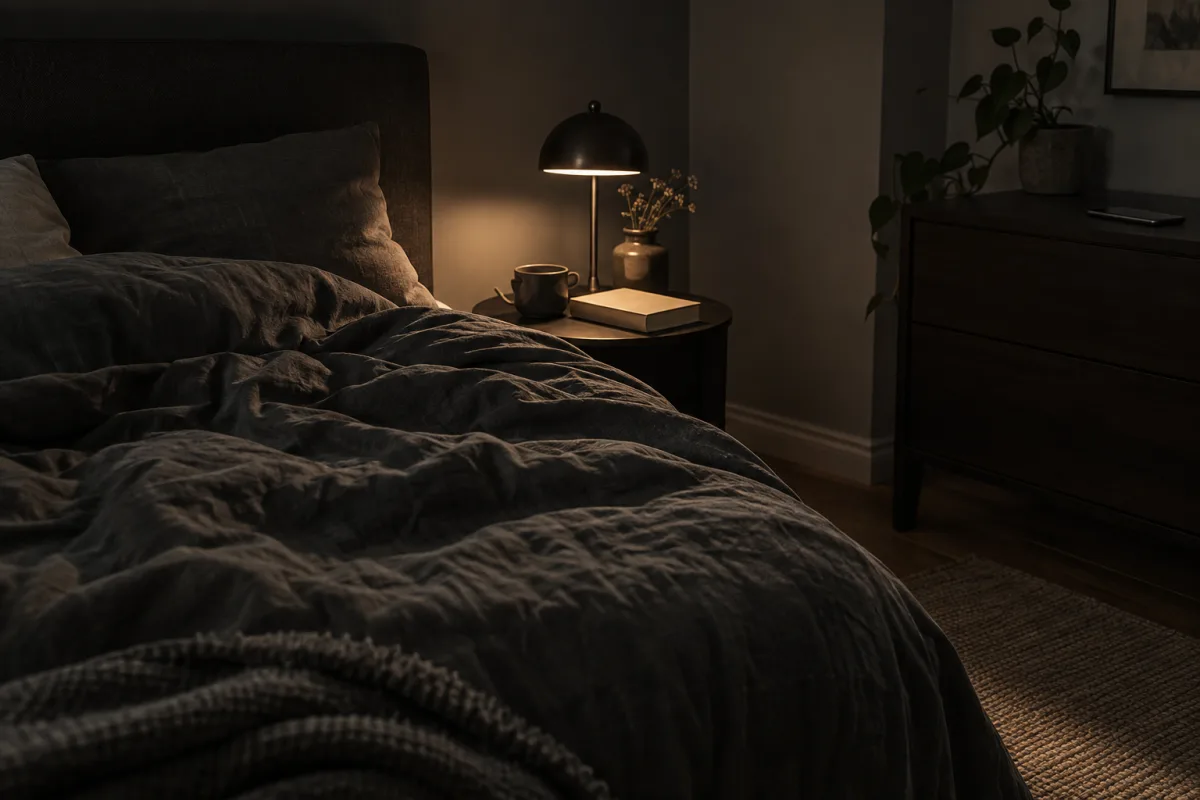
Then make the bed a different setting. Move the charger beyond arm’s reach before you are tired. If you can, charge the phone outside the bedroom. If you share a space, the other side of the room is a workable starting point.
Solve the alarm and emergency objections first
If your phone is your alarm, test whether you can hear it from its new charging spot. A separate alarm clock is another option. If you need to be reachable, check your call and notification settings before bedtime and test them with someone you trust.
Do not rely on a restriction you have not tried. Keep medical, caregiving, accessibility, and work needs in mind. The goal is to put distance between you and the feed, while keeping the functions you need.
Try a half-hour boundary, then review it
A small randomized pilot trial assigned 38 participants either to avoid their phone for 30 minutes before bed or to a control group. After four weeks, the intervention group showed improvements in several sleep measures. Participants were motivated to change and received monitoring, so this is promising evidence rather than a guarantee.
Use that half hour as an experiment, not a perfect-sleep rule. Put a low-effort alternative where your phone used to be: a familiar paperback, a notebook, or audio started before you park the phone. Record when you put the phone down and how the next morning felt.
A warmer screen is still a feed
Night Shift may make the screen more comfortable, but it does not create a stopping point. A randomized study of young adults found no overall sleep benefit attributable to Night Shift across its full sample. Do not let the warmer colour become permission for another hour of scrolling.
If you end up back on your phone, stop at the next moment you notice. There is no need to finish the session because the plan already slipped. If sleep problems persist, consider discussing them with a clinician rather than adding stricter phone rules indefinitely.
Close the tab. Try this.
One small action.
Before tonight: move your charger, check your alarm and important calls, and put one easy alternative beside the bed. Choose a phone-parking time 30 minutes before your intended bedtime.
Set up bedtime while you still have energy to make decisions.
Sources & context
- He et al. (2020), PLOS ONE — restricting bedtime mobile phone use ↗
Small randomized pilot trial with motivated participants and active monitoring.
- Duraccio et al. (2021) — iPhone Night Shift and sleep outcomes ↗
Randomized study in emerging adults; no overall benefit attributable to Night Shift.
- r/nosurf: How I Broke Up With My Phone ↗
Personal account discussing a phone-free bed. Useful lived experience, not controlled evidence.
Written by EvoCat, the app’s publisher. Educational guidance, not medical advice. Our editorial approach · Suggest a correction
Put a boundary into practice
Let a cat interrupt the habit.
EvoCat adds challenges before screen access, with a strict blocking option too.
Explore EvoCat for iPhone ↗