Choose what you want the meal to be for
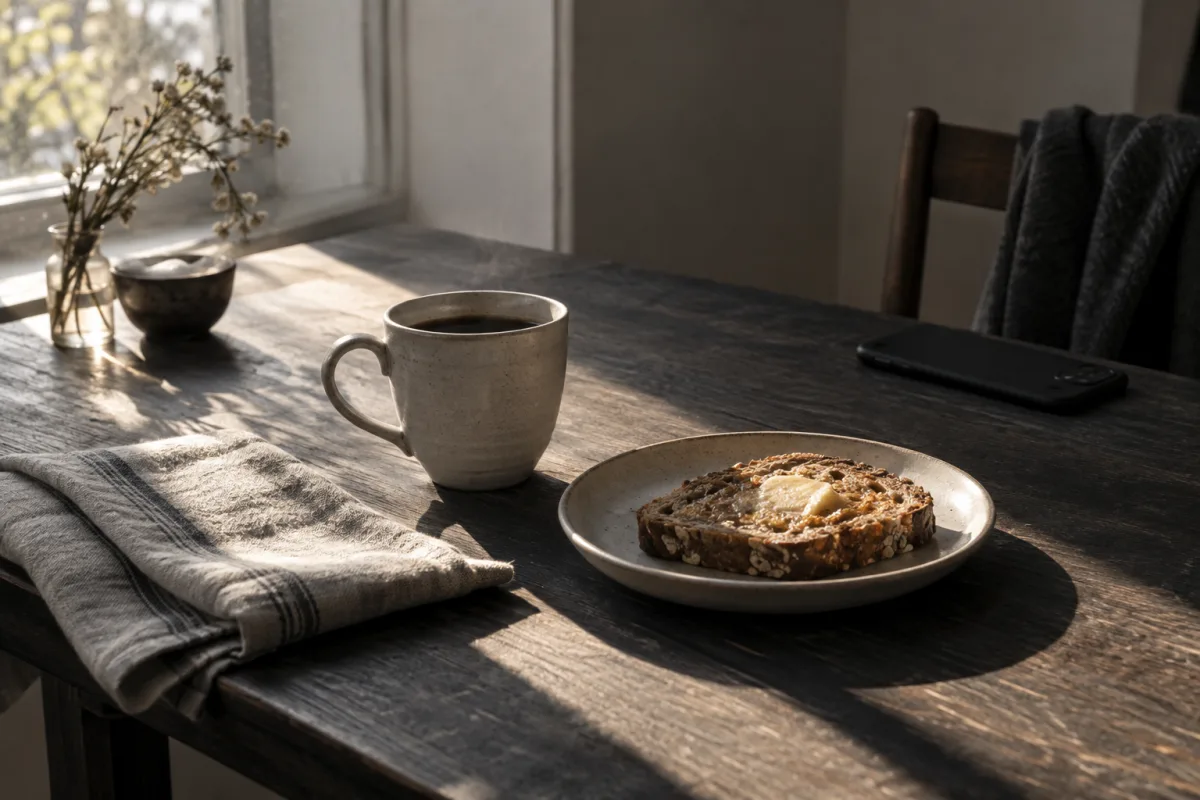
Lunch might be your first quiet break of the day. Dinner might be the only time you see your housemate. Name what you want to protect: tasting the food, talking, or simply having ten minutes without new information. You do not need to turn eating into a productivity exercise.
For shared meals, there is relevant research. In a restaurant experiment with more than 300 participants, groups were assigned to keep phones on the table or put them away. People in the phone-present condition reported more distraction and less enjoyment. That supports trying a change at the table; it does not mean every phone use harms a relationship, or establish the same result for eating alone. The source note links to the study.
Give the phone a place before the food arrives
Pick a reachable but separate place: a bag, a shelf, or the charger across the room. Decide before sitting down, while you are still setting things up. If the phone remains beside your plate, turning it face-down may leave the same easy reach in place.
Make the boundary concrete: “From my first bite until I clear the plate, the feed stays closed.” At a restaurant, use the phone for the QR menu or payment when needed, then return it to its place. A practical rule can include necessary tasks without becoming an excuse to browse between them.
If you are waiting for an important call, keep the phone where you can hear it and tell the person you are eating with. Separate useful alerts from distracting ones instead of making yourself unavailable when you need to be reached.
Invite company without policing anyone
Try a small invitation: “I want to actually catch up. Shall we put our phones away until we finish?” Offer to put yours away first. Agree on exceptions, such as a caregiver call or showing one photo that is part of the conversation.
If someone needs their phone or does not want to join in, keep the boundary about your own use. Snatching devices, counting violations or announcing everyone’s screen time turns dinner into an argument. When a conversation pauses, leave a little room for the pause. You do not have to fill it immediately with a search or a clip.
Make eating alone comfortable
If scrolling supplies company, simply removing it can leave the meal feeling flat. Choose what would make this particular break pleasant: sit by a window, put on music before you start, or arrange a call with a friend for afterwards. You can also eat quietly without replacing the feed with another activity.
Start smaller if an entire meal feels unrealistic. Eat the first five minutes without your phone, then decide what you want to do next. The five-minute starting point is our practical suggestion, not a research-backed threshold.
A chosen programme or conversation is different from opening an endless feed without a plan. Decide what counts for your own goal. If you want more options, use the list of alternatives to scrolling to choose something that meets the same need.
Finish the meal before checking the result
Clear your plate or make a cup of tea before picking up the phone. That gives the meal a visible ending, rather than letting a notification decide when your break is over. If you reached for the phone halfway through, put it back and continue; the rest of the meal still counts.
Try three meals, then ask whether they felt more restful or connected, and what got in the way. Total daily screen time may barely change. That is fine if this was the moment you wanted back. Use a screen-time goal tied to your life, not a number that ignores how you spent the time.
Close the tab. Try this.
One small action.
Choose your next meal, a place for the phone, and any necessary exception. Put it there before the first bite. After clearing the plate, write one sentence about the meal and one thing to adjust. Repeat for three meals before deciding whether the boundary fits.
One meal is a useful place to practise leaving a feed. Make room for the food and the company, with exceptions that fit your actual life.
Sources & context
- Dwyer, Kushlev & Dunn (2018) — Smartphone use undermines enjoyment of face-to-face social interactions ↗
A randomized restaurant field experiment and a separate experience-sampling study examined distraction and enjoyment during social interactions. They did not test solo meals or this three-meal exercise; those suggestions are editorial adaptations.
Written by EvoCat, the app’s publisher. Educational guidance, not medical advice. Our editorial approach · Suggest a correction
Put a boundary into practice
Let a cat interrupt the habit.
EvoCat adds challenges before screen access, with a strict blocking option too.
Explore EvoCat for iPhone ↗