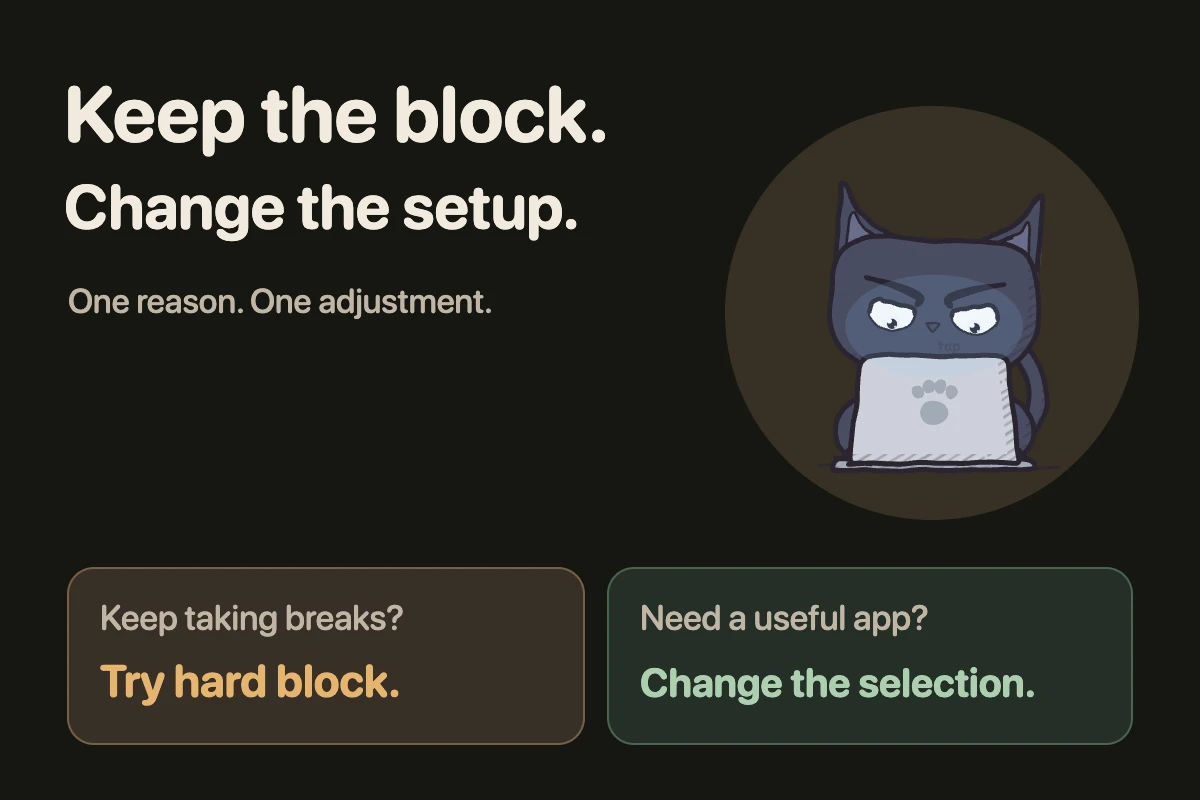
First, name the reason you override it.
Write one sentence after the next override: “I opened it because ___.” Needing an authenticator, wanting a rest and avoiding a difficult task call for different changes.
If the app opened without any restriction, use the Screen Time troubleshooting checklist. This lesson is for a working boundary you keep choosing to lift.
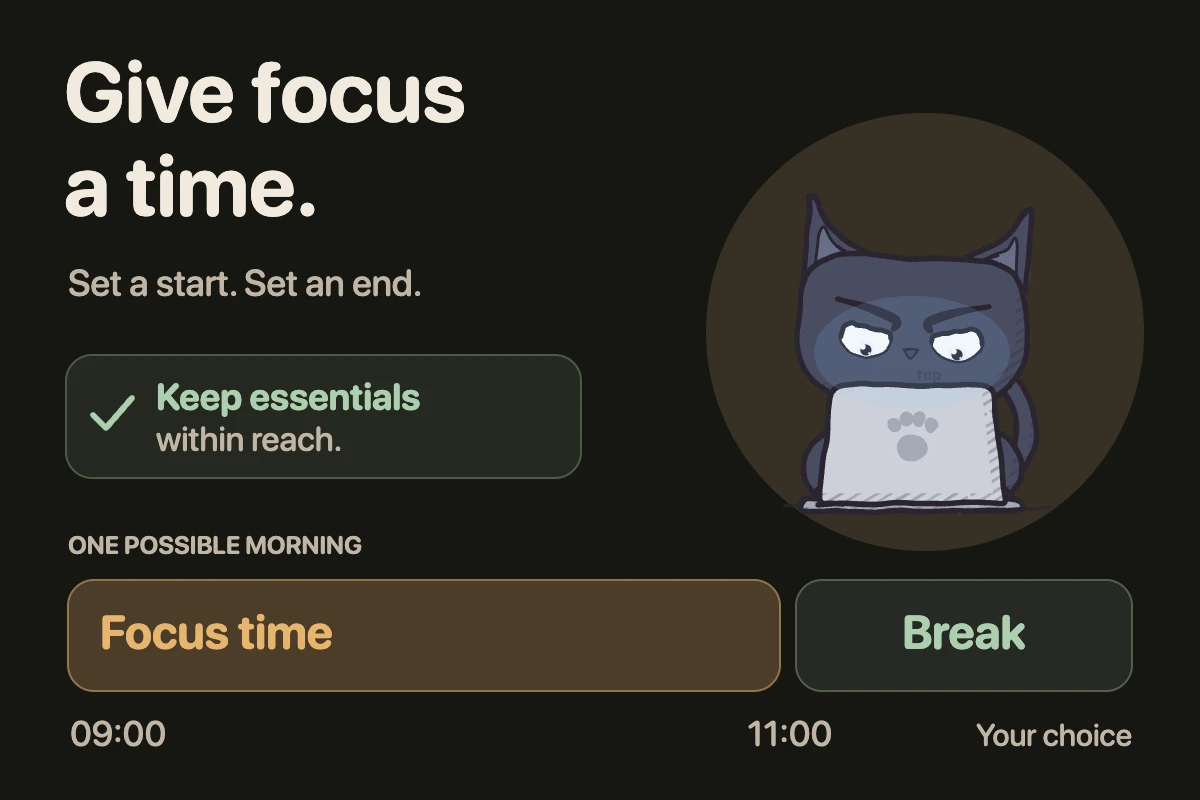
Protect one hour you actually need.
Choose a specific activity, such as writing from 9–10 AM. Block the feeds that interrupt it, while keeping calls and necessary tools available. If you switch to the same feed in Safari, include the website route in your setup.
Prepare a break outside the feed: water, a stretch or a few minutes away from the desk.
Choose how a break works.
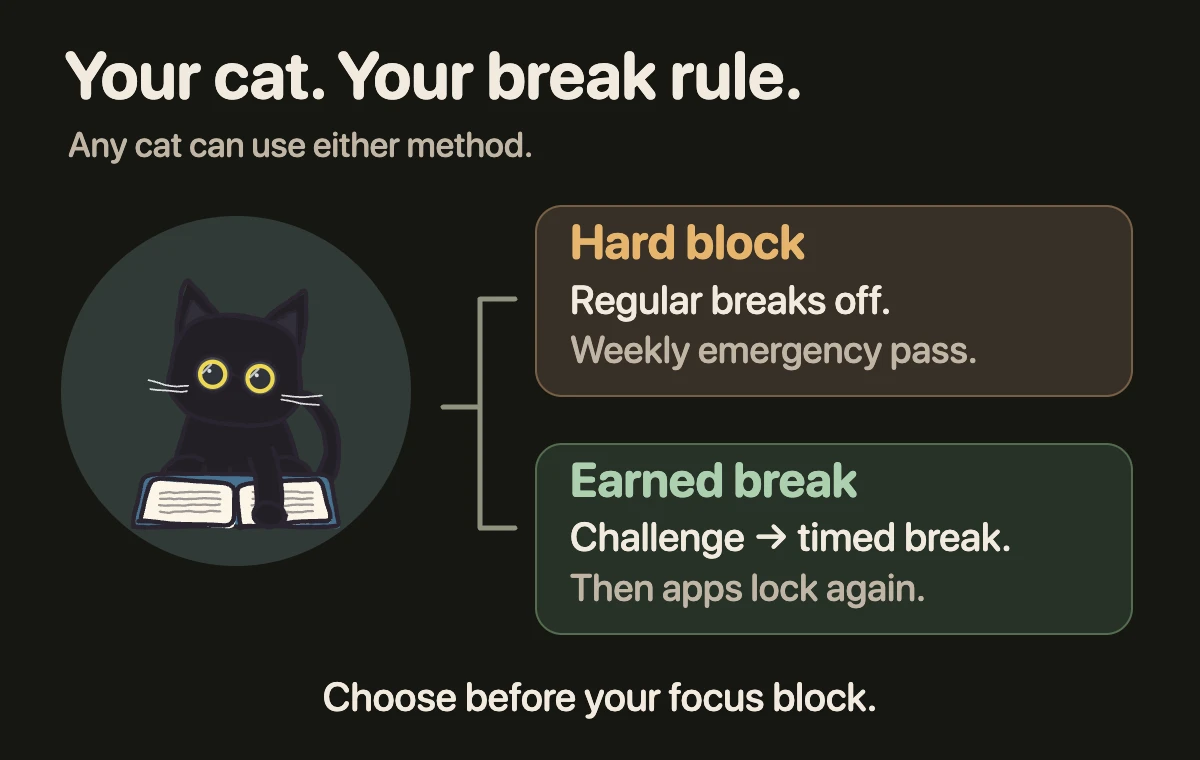
- Want a deliberate pause? EvoCat’s earned breaks ask for chess, push-ups, a quiz or breathing. Complete the challenge, take a timed break, and apps lock again.
- Keep turning breaks into more scrolling? Try hard block for that window. Regular breaks are disabled and editing a running scheduled block is locked. A separate weekly emergency pass allows a 1–15 minute pause during an active scheduled hard block.
Your cat is a companion. Every cat works with either choice.
Review what happened, then change one thing.
Did you complete the activity? What made you lift the boundary? Adjust the app selection, break rule or time window before the next session.
A small 2026 randomized trial found less reported time on a target app with customizable reminders, but no significant change in its problematic-social-media-use measure. It tested Wellspent, not EvoCat, and did not compare reminders with hard block. Treat this plan as an experiment for your routine.
Close the tab. Try this.
One small action.
Before tomorrow’s focus hour, write down the activity, apps to block and break rule. Afterward, note whether you did the activity and why you overrode the block, if you did. This is our practical suggestion, not a tested treatment protocol.
Choose the rule before the urge. Use what happened to improve the next block.
Sources & context
- Mertens et al. (2026) — Wellspent randomized controlled trial ↗
Original paper, published April 8, 2026; methods, results and limitations checked November 3. Three-week trial with 70 randomized iPhone users, attrition and self-report limitations. Two authors disclosed ties to Wellspent. It does not establish EvoCat’s effectiveness or prove one blocking mode is best.
- EvoCat — hard block, earned breaks and emergency access ↗
Our own product documentation explains the methods used in the examples. The character illustrations show choices, not app screenshots or research results.
Written by EvoCat, the app’s publisher. Educational guidance, not medical advice. Our editorial approach · Suggest a correction
Put a boundary into practice
Set the rule. Bring your cat.
Choose hard block or an earned-break method in EvoCat, then protect your next focus window. A free trial is available for eligible subscribers; app blocking requires a paid subscription afterward. Check the trial terms in the app.
Download EvoCat for iPhone ↗