Can a reminder reduce scrolling?
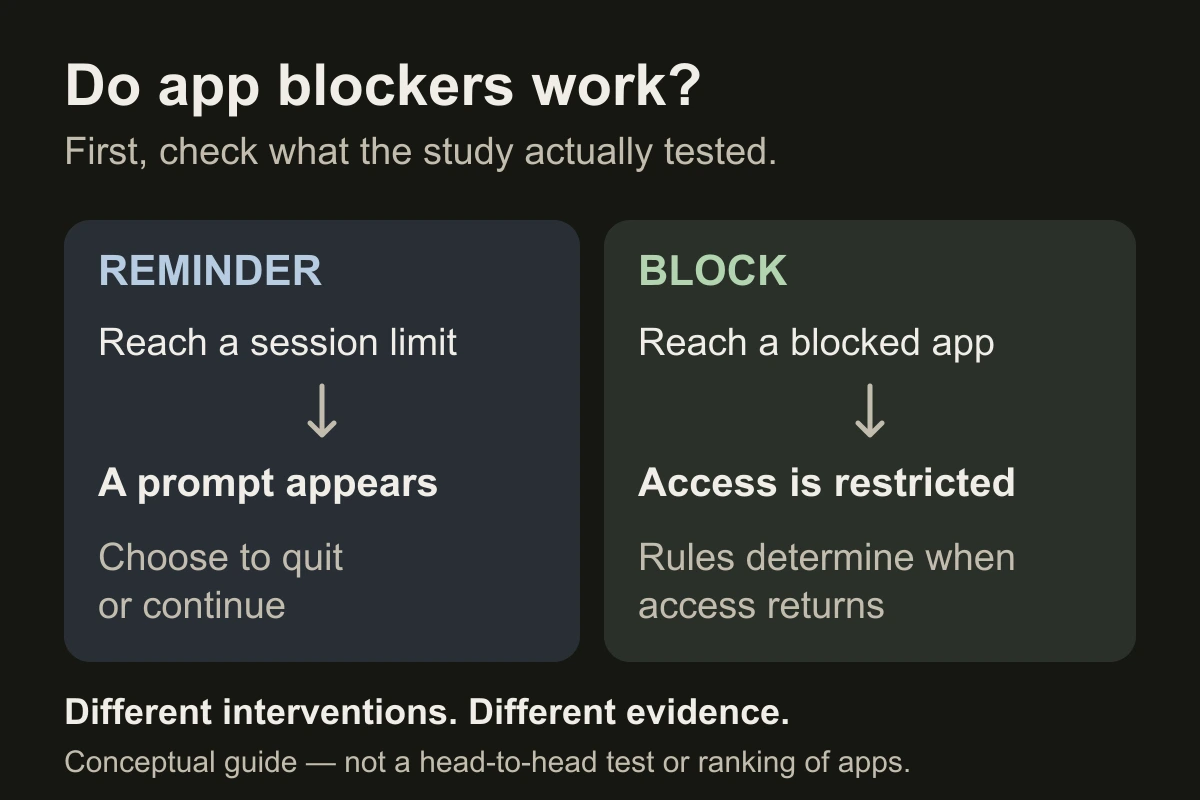
Yes, in some circumstances. A 2026 randomized Wellspent trial assigned 70 iPhone users to reminders or a control group. After a chosen session limit, a full-screen prompt let users quit or continue.
The study estimated about 29 minutes less daily use of the target social app relative to the control group’s change. It did not show a clear improvement in its primary problematic-social-media-use measure. The trial was small, with missing data, and does not establish lasting habit change.
What does stronger blocking show?
A 2025 randomized trial assigned 467 people to block all smartphone internet for two weeks, either immediately or later. Calls, texts and internet on other devices remained available.
Phone use fell; attention and well-being improved. Only 119 participants met the predefined adherence threshold of blocking for at least 10 of 14 days. This broad internet restriction is different from a short daily app limit. It does not prove that the strictest tool is best for everyone.
How do you know if your blocker helps?
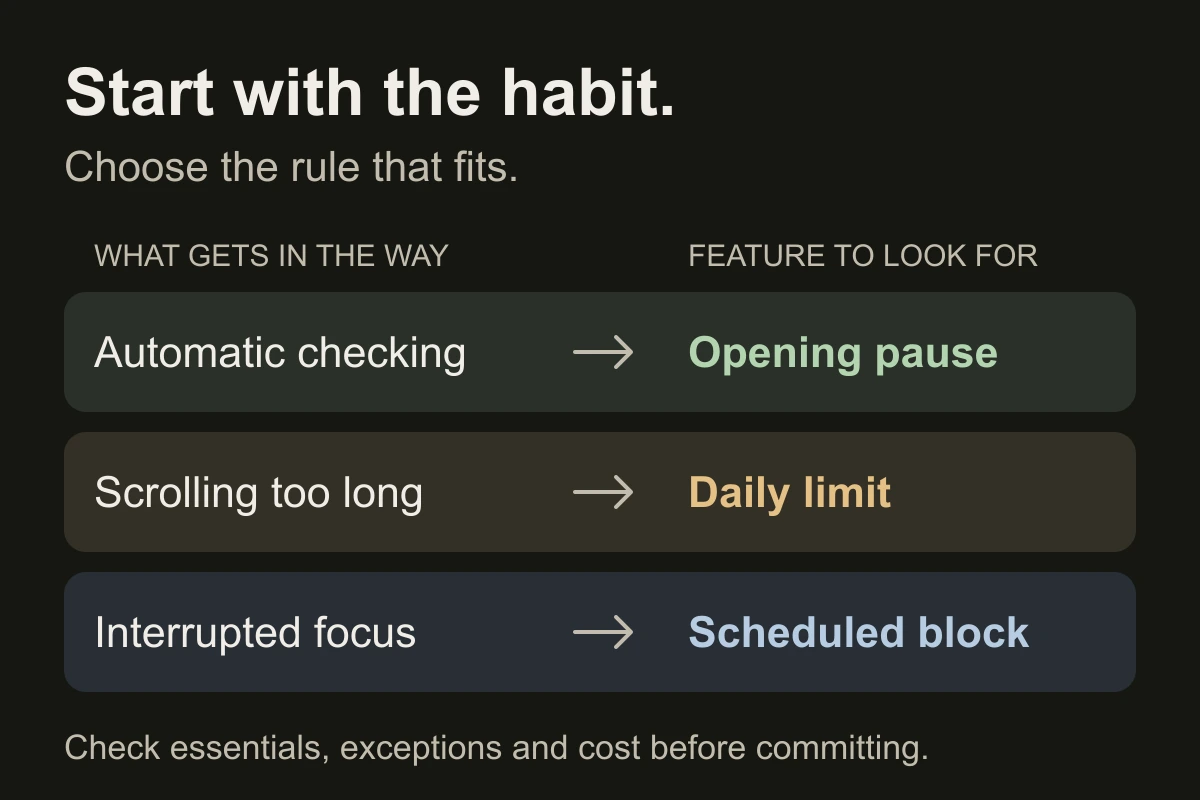
Choose one rule that fits your problem. Keep essential tools available, then record three things across comparable days:
- Use: target-app minutes, including scrolling that moves to a browser or another device.
- Follow-through: whether the task, bedtime or conversation you wanted to protect actually happened.
- Friction: overrides, disabled rules and necessary tasks the block interrupted.
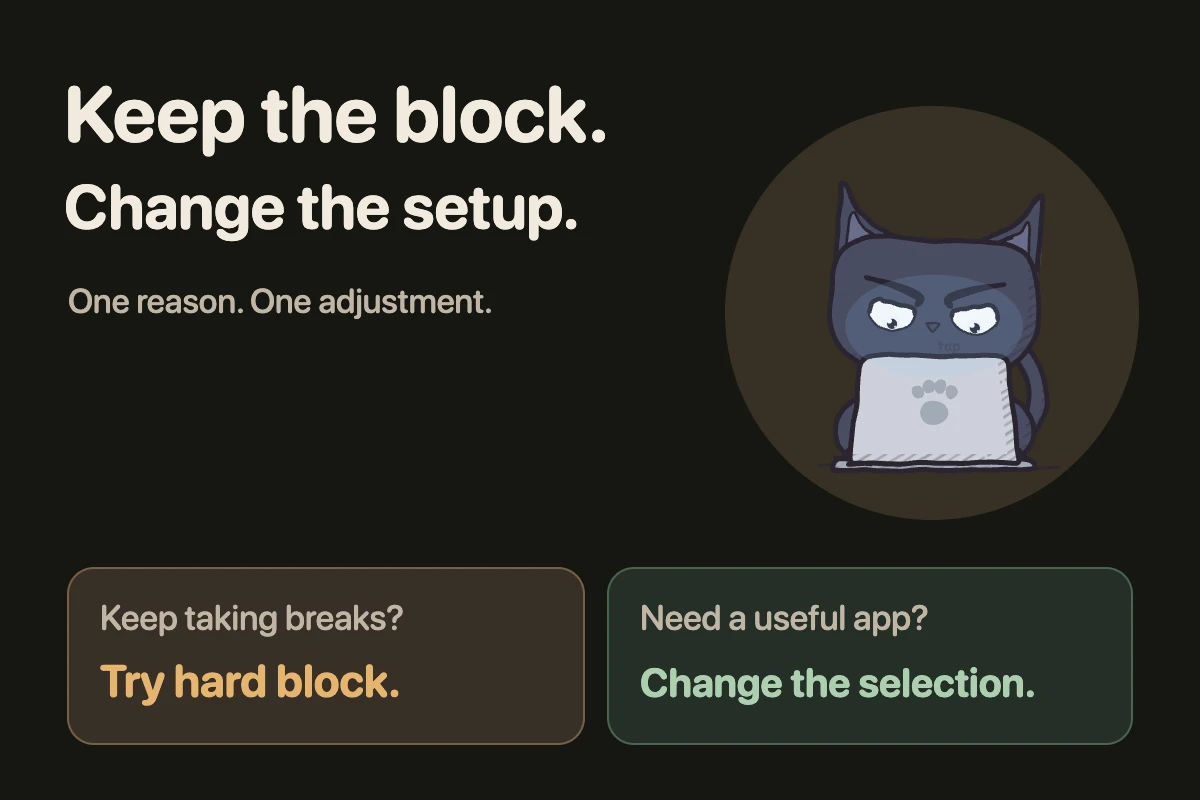
Try one setup for a week, compare similar weekdays and adjust. This is a personal check, not a validated research protocol. If you keep overriding it, review the rule and exceptions.
Is a lower screen-time total enough?
It is one signal. Less unwanted scrolling is useful when it gives you something you wanted back. A specific goal makes that easier to judge than chasing the lowest total.
Close the tab. Try this.
One small action.
Write one sentence before changing a setting: “If this boundary helps, I will spend less time on ___ and make room for ___.” Review both after a week.
Judge a blocker by the time and activity it protects, as well as whether you can keep using it.
Sources & context
- Mertens et al. (2026) — Wellspent randomized controlled trial ↗
Published April 8, 2026. Three-week study with 70 randomized iPhone users; the primary-outcome analysis included 46. App minutes came from device records entered by participants. The roughly 29-minute estimate concerns the selected social app, not total phone use. Short duration, missing data and self-report limit conclusions. One author worked at Wellspent and another was its cofounder.
- Castelo et al. (2025) — Blocking mobile internet on smartphones ↗
Randomized delayed-intervention trial, with blocking logs, usage screenshots, questionnaires and an attention task. Of 467 participants, 119 met the adherence threshold; 313 completed all three surveys. Motivated volunteers, attrition and possible expectancy effects limit generalization. It tested full phone-internet blocking, not every app blocker.
Written by EvoCat, the app’s publisher. Educational guidance, not medical advice. Our editorial approach · Suggest a correction
Put a boundary into practice
Put one boundary into practice.
EvoCat offers scheduled app blocking, hard block and earned-break challenges on iPhone and iPad. These studies did not test EvoCat. A free trial is available for eligible subscribers, with a paid subscription afterward; check the terms in the app.
Download EvoCat for iPhone ↗